Restaurant equipment cleaning in Cairo
Restaurant Equipment Cleaning Cairo
Detailed cleaning for busy commercial kitchens, with scopes built around your equipment, operating hours, and food-safety priorities.
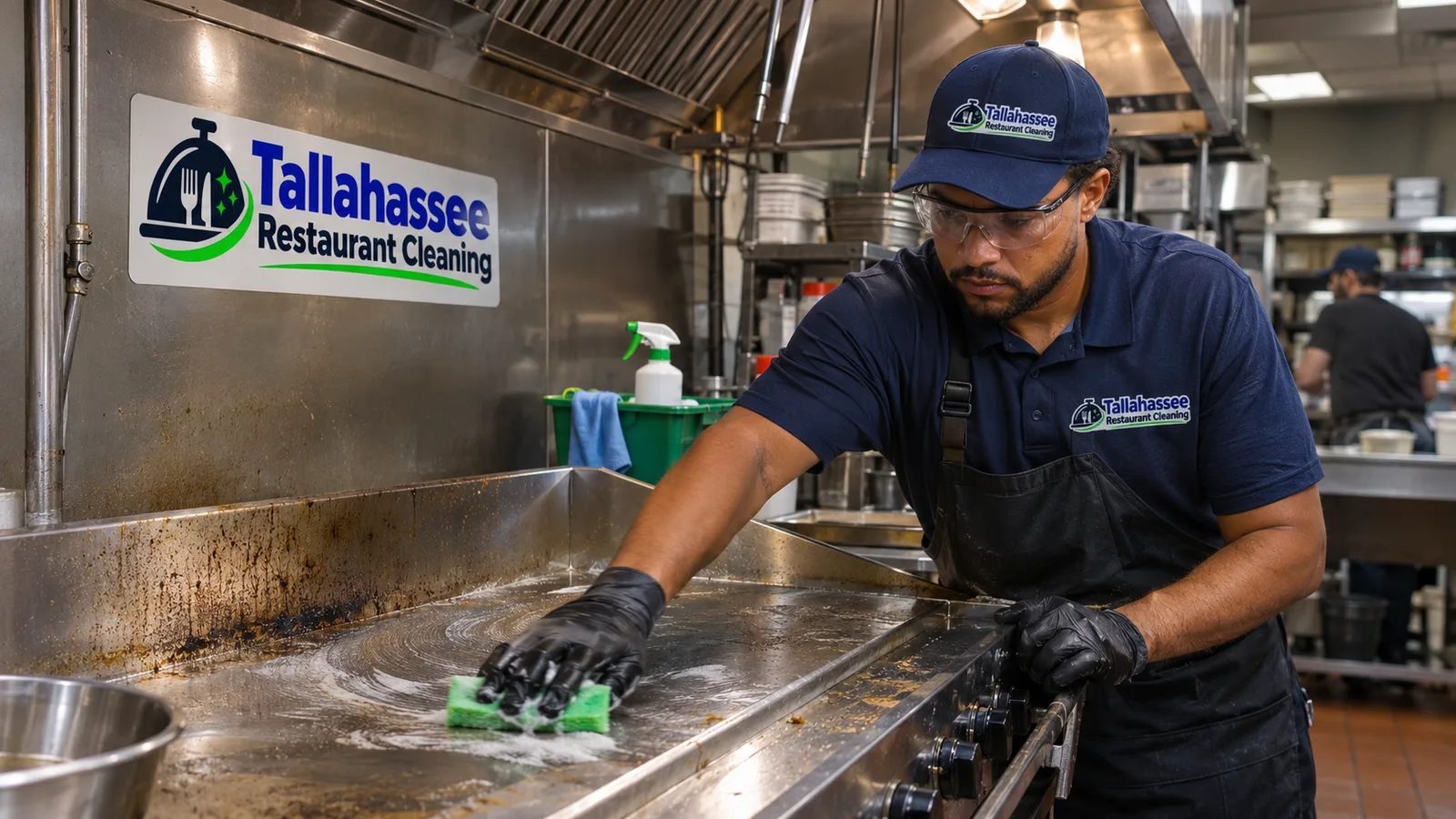
Built for Cairo food businesses
Commercial Kitchen Cleaning Built Around Your Operation
Restaurant Equipment Cleaning Cairo businesses can schedule around prep, service, and closing routines. Tallahassee Restaurant Cleaning handles detailed equipment cleaning for restaurants, cafés, bakeries, bars, caterers, and institutional kitchens in Cairo, Georgia. The scope can cover cooking lines, prep equipment, refrigeration exteriors, stainless-steel surfaces, and the hard-to-reach areas where grease and food debris collect.
Our crew starts by identifying the equipment, soil level, access limits, and surfaces that need special care. We are a restaurant company Tallahassee homeowners rely on, bringing the same practical approach to nearby Cairo food businesses: define the work, protect sensitive components, use suitable cleaning methods, and document priorities before service begins. Businesses near Cairo's downtown commercial area may need tight after-hours scheduling, while roadside restaurants along US 84 often have larger cook lines and heavier service volumes. The cleaning plan should fit the kitchen rather than interrupt it.
Equipment cleaning supports routine sanitation, but it does not replace employee food-contact cleaning, pest control, equipment repair, or required exhaust-system service. We keep the scope clear so managers know exactly what will be cleaned.
Equipment and surface scope
What Restaurant Equipment Cleaning in Cairo Can Cover
A detailed scope may include ranges, ovens, fryers, griddles, charbroilers, steam tables, hot holding units, mixers, slicers, prep tables, shelving, sinks, and the accessible exterior surfaces of coolers, freezers, and ice machines. Crews can address removable components, control-area surrounds, casters, legs, undersides, equipment sides, and the floor and wall edges exposed when movable units are pulled forward safely.
Each surface calls for the right method. Degreasers need proper dwell time to loosen cooked-on fats. Agitation lifts residue from textured metal and seams. Low-moisture detailing is used near controls, motors, wiring, burners, and ventilation openings. Food-contact components require products and rinsing or sanitizing steps appropriate to their use. Manufacturer instructions take priority when equipment has coated panels, soft metals, stone surfaces, electronic controls, or other sensitive parts.
Florida's warm, humid climate can make grease films and trapped food residue especially unpleasant in poorly ventilated spaces. Regular attention to gaps, casters, and equipment sides helps reduce odor sources and makes daily cleaning more manageable.
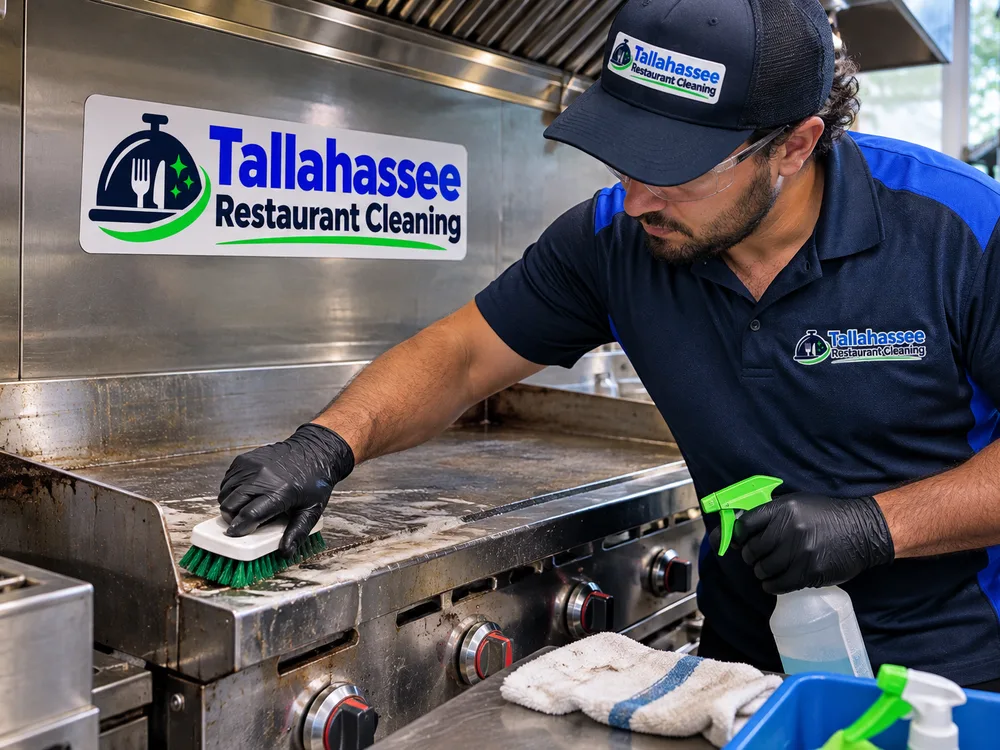
Practical cleaning scope
Equipment and Areas Included in a Practical Scope
Cooking-Line Equipment
Exterior and accessible interior surfaces of ranges, ovens, fryers, griddles, charbroilers, and hot holding equipment can be degreased according to equipment condition and manufacturer guidance.
Prep Equipment
Mixers, slicers, worktables, shelving, and other prep units are cleaned with attention to guards, seams, supports, removable parts, and food-contact requirements.
Cold-Side Exteriors
Cooler, freezer, and ice-machine exteriors can be detailed around handles, gaskets, hinges, kick plates, tops, and accessible sides. Internal mechanical or refrigerant work is excluded.
Behind and Beneath Units
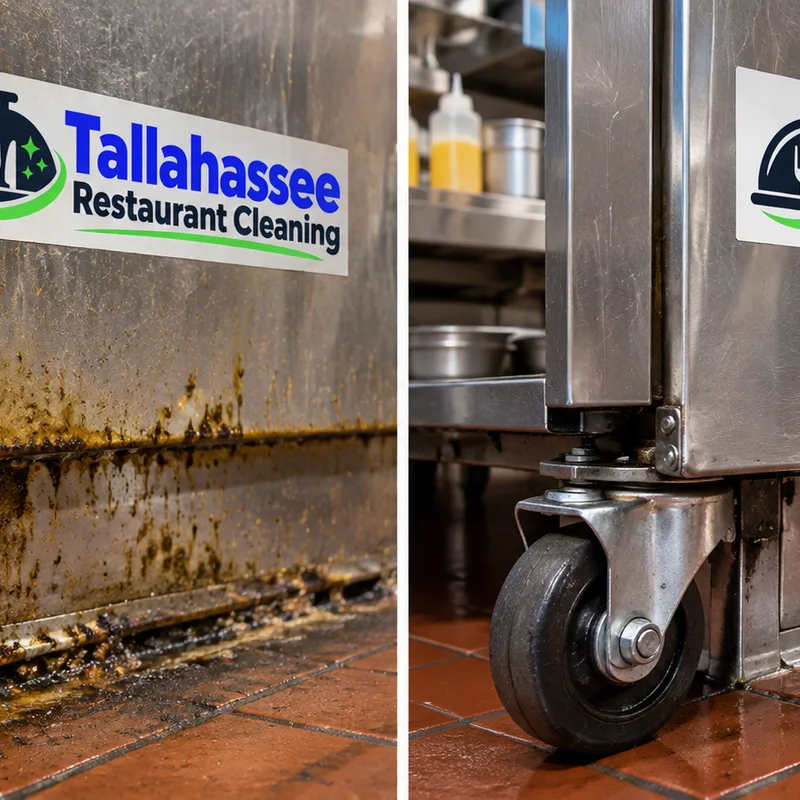
Where equipment is safely movable, crews can address casters, legs, walls, floor edges, and residue hidden between adjacent units.
Stainless-Steel Finishing
After soil removal, stainless steel is wiped with the grain to limit streaking and reduce visible residue. Abrasive tools are avoided where they may scratch the finish.
Targeted Deep Cleaning
Managers can prioritize the equipment with the heaviest buildup or arrange a broader restaurant cleaning scope around shutdowns, inspections, or recurring maintenance.
-
Review the Kitchen and Schedule
We discuss the equipment list, operating hours, recent cleaning history, access, and priority areas. Photos or an on-site assessment may be used to define a realistic scope.
-
Confirm Responsibilities
The written plan identifies included surfaces, equipment that staff must empty or cool, items that can be moved, and any areas excluded because of electrical, gas, fire-suppression, or manufacturer restrictions.
-
Prepare and Protect
Equipment is shut down and cooled as required. Sensitive openings and nearby food, utensils, packaging, and clean prep surfaces must be removed or protected before degreasing begins.
-
Degrease and Detail
The crew applies compatible products, allows suitable dwell time, agitates buildup, removes residue, and details seams, legs, casters, undersides, and adjacent accessible surfaces.
-
Inspect the Completed Scope
Cleaned areas are checked for remaining residue, surfaces are left ready for the restaurant's required sanitizing or startup procedures, and any inaccessible or damaged areas are reported to management.
Scope-based pricing
How Much Does Restaurant Equipment Cleaning Cost in Cairo?
Restaurant equipment cleaning in Cairo typically costs about $300 to $1,500 for a scheduled visit. A small cook line or limited equipment list may fall near the lower end, while a large kitchen with heavy grease buildup can exceed the range.
Final pricing depends on equipment count, soil level, access, shutdown time, removable components, and whether units can be moved safely. Recurring service may require less labor per visit than neglected equipment. The exact cost is confirmed after the kitchen, equipment list, and requested scope are assessed.
Beyond visible surfaces
Why Detailed Equipment Cleaning Matters
Grease does not stay on the visible face of a cooking appliance. It reaches control surrounds, seams, undersides, wheels, walls, and narrow spaces between units. Crumbs and spilled liquids collect in the same places. Daily wiping may keep the working surface ready for service while leaving those concealed areas untouched.
A planned deep clean gives managers a chance to inspect the equipment more closely. Cleaning may expose loose gaskets, damaged seals, corrosion, worn casters, cracked surfaces, or leaks that need a qualified repair technician. Clean equipment is easier to inspect, but cleaning is not mechanical maintenance and cannot correct a fault.
Commercial kitchens in Cairo also need to account for local food-safety oversight. The Florida Department of Business and Professional Regulation regulates many public food-service establishments, while other facility types may fall under different agencies. Cleaning records, chemical labels, Safety Data Sheets, and a defined schedule can help operators manage their own sanitation procedures. Regulatory compliance remains the operator's responsibility.
Get a written equipment list, service scope, and scheduling plan that works around your Cairo kitchen's operating hours.
Call for a Free QuoteCommon questions
Restaurant Cleaning Cairo Questions
Can equipment cleaning be scheduled after the restaurant closes?
Yes, after-hours scheduling may be arranged when crew availability and the job scope allow it. Equipment must have enough time to shut down and cool safely, and managers should account for drying, sanitizing, inspection, and restart procedures before the next service period.
Does the restaurant need to empty and cool the equipment first?
Yes, food, utensils, loose supplies, and removable containers generally need to be cleared before work, and heated equipment must be shut down and cooled. The preparation plan will identify responsibilities for fryers, ovens, refrigerators, prep units, and other equipment in the Cairo kitchen.
Do you clean fryers, ovens, griddles, and charbroilers?
Yes, those units can be included when their condition, construction, and access permit safe cleaning. The scope may cover removable parts and accessible exterior or interior surfaces, but gas components, wiring, thermostats, and fire-suppression equipment require appropriate qualified service when repair or disassembly is involved.
Is restaurant equipment cleaning the same as hood and exhaust cleaning?
No, equipment cleaning and commercial kitchen exhaust cleaning are separate scopes. Exhaust ducts, rooftop fans, and fire-suppression components require specialized procedures, so managers should confirm which contractor is responsible for each system rather than assume the cook-line cleaning includes it.
How often should a Cairo restaurant schedule deep equipment cleaning?
The interval should be based on cooking volume, menu, grease production, equipment design, and daily cleaning results. A high-volume fryer or charbroiler line may need more frequent attention than lightly used holding equipment. Inspections of seams, casters, undersides, and equipment gaps help managers set a useful schedule.
Can service focus on selected equipment instead of the whole kitchen?
Yes, a visit can target priority units or a defined cooking line. This can suit a Cairo restaurant preparing for maintenance, addressing a problem area, or dividing a larger deep-cleaning plan into manageable phases.
What affects how long restaurant cleaning takes?
Equipment count, buildup, kitchen access, cooling time, removable parts, and the ability to move units safely determine the duration. A clear equipment list and current photos help estimate labor, but the final schedule depends on the condition found during assessment.
Plan a Cleaner, More Manageable Commercial Kitchen
Tell Tallahassee Restaurant Cleaning about your Cairo equipment, operating schedule, and problem areas. We will help define a practical scope before work begins.