Restaurant night cleaning in Tallahassee
Restaurant Night Cleaning in Tallahassee
A consistent overnight crew cleans kitchens, dining rooms, restrooms, and staff areas after closing so your restaurant is ready for the next shift.
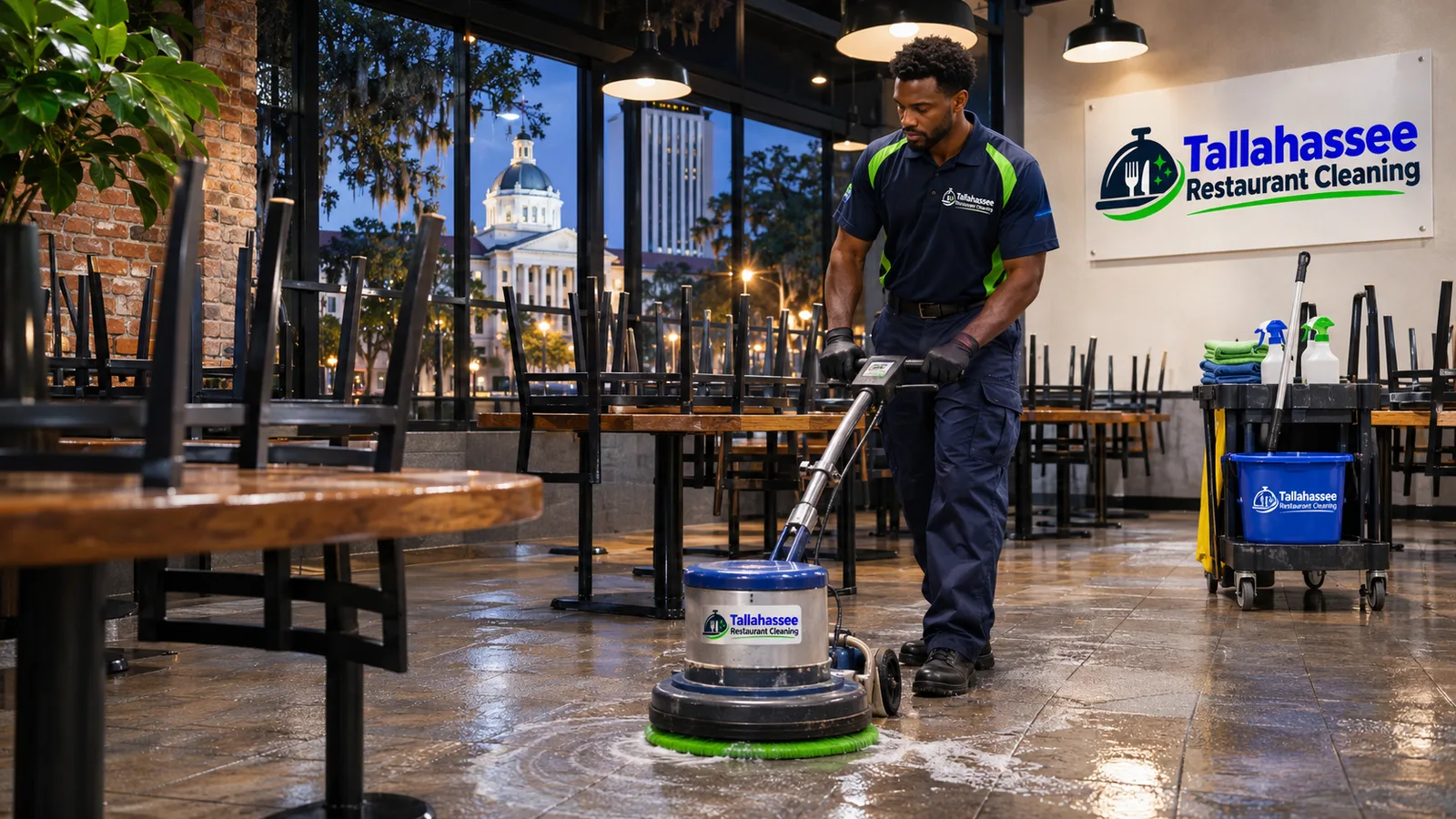
A dependable overnight reset
Reliable Cleaning After the Last Guest Leaves
Restaurant Night Cleaning gives managers a dependable way to reset the building without interrupting guests, servers, or kitchen production. Tallahassee Restaurant Cleaning schedules work after closing and builds the scope around your hours, floor plan, equipment, and busiest service periods.
Our restaurant specialists serving Tallahassee clean to a written checklist that separates front-of-house, restroom, and kitchen duties. This makes responsibilities clear and helps prevent commonly missed work around table bases, beneath movable equipment, along floor edges, and at restroom touchpoints. Managers can also specify alarm procedures, key control, approved products, and areas that require special handling.
Tallahassee restaurants face long stretches of warm, humid weather. Grease films, tracked moisture, food residue, and restroom odors need timely attention rather than occasional correction. A recurring overnight schedule keeps buildup manageable and gives the opening crew a cleaner starting point.
Front and back of house
What Overnight Restaurant Cleaning Covers
A complete scope follows the way contamination and soil move through a restaurant. Front-of-house work may include sweeping or vacuuming, damp mopping, spot cleaning glass, wiping tables and other agreed surfaces, cleaning booth edges, and removing trash. Floor care is matched to the material, whether the dining room has luxury vinyl tile, ceramic tile, sealed concrete, or carpeted areas.
Back-of-house cleaning targets grease and food soil on accessible, approved surfaces. Typical duties include degreasing floors, scrubbing traffic lanes, cleaning floor edges, wiping exterior equipment surfaces, emptying waste containers, and cleaning around movable equipment when access is authorized. The scope should distinguish routine janitorial work from equipment disassembly, hood-system service, grease-trap pumping, and pest control, which require separate procedures or providers.
Cleaning removes soil. Sanitizing follows on cleaned food-contact surfaces with an approved product at the label's required concentration and contact time. Your food-safety plan determines which surfaces staff handle and which duties are assigned to the janitorial crew.
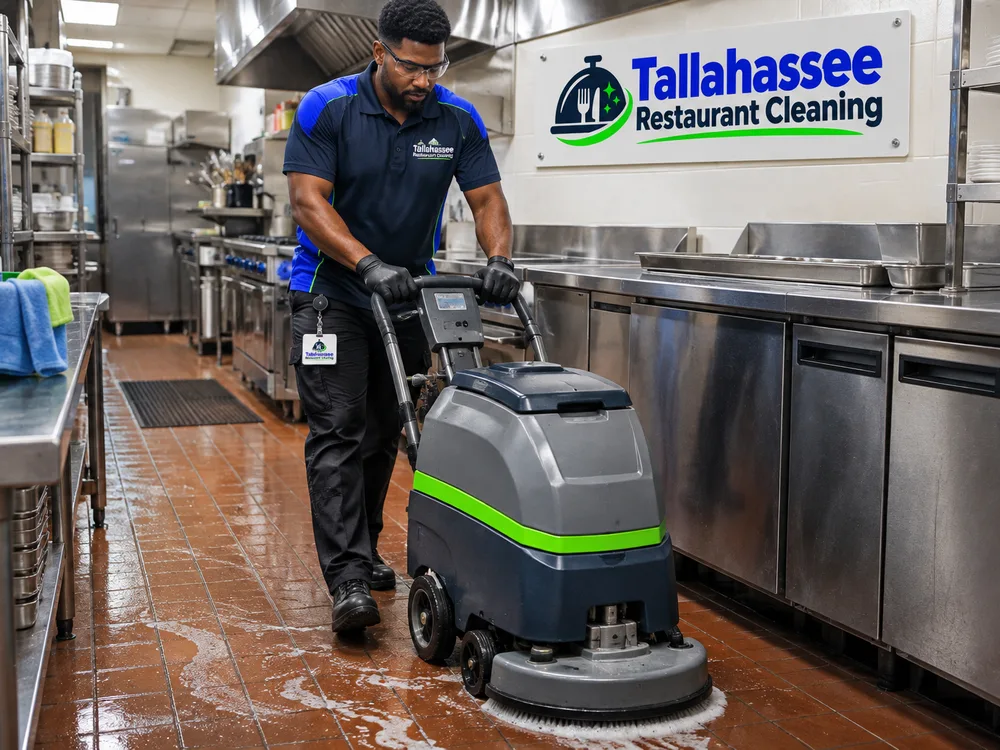
A location-specific checklist
Restaurant Janitorial Cleaning by Work Area
Nightly duties are organized around each work area, its surfaces, and how it is used during service.
Dining Rooms and Entry Areas
Floors, table bases, booth edges, ledges, entrance glass, waiting areas, and waste stations are cleaned after guest traffic ends. High-touch items are addressed according to the written scope.
Kitchen Floors and Accessible Surfaces
Degreasing and mechanical agitation help lift kitchen soil from appropriate hard floors. Crews clean accessible equipment exteriors and approved areas without disturbing stored food or controls.
Restaurant Restroom Cleaning
Toilets, urinals, sinks, dispensers, partitions, mirrors, floors, and touchpoints receive focused cleaning. Supplies can be restocked when the restaurant provides them or includes replenishment in the agreement.
Bars and Beverage Stations
Agreed non-food-contact surfaces, floor edges, mats, waste containers, and accessible areas around beverage stations are cleaned after staff complete closing duties.
Staff and Service Areas
Break areas, employee restrooms, corridors, server stations, and other back-of-house spaces can be added to the nightly checklist.
Periodic Floor Care
Machine scrubbing, carpet extraction, grout attention, and finish maintenance can be scheduled separately based on the floor type, traffic, and manufacturer guidance.
-
Walk Through the Restaurant
We review the dining room, kitchen, restrooms, storage access, flooring, waste procedures, closing time, and opening deadline. Existing problem areas and excluded tasks are documented.
-
Set the Scope and Frequency
You receive a defined checklist for nightly, daily, or periodic duties. The plan identifies products, equipment, supply responsibilities, access instructions, and any areas that require manager approval.
-
Plan the Overnight Window
Arrival and completion times are coordinated around the restaurant's actual close. Access codes, keys, alarm steps, lights, doors, and end-of-shift reporting are agreed before recurring work begins.
-
Clean and Check the Work
The crew follows the location-specific checklist. Supervisory reviews and manager feedback are used to correct missed details and update the scope when operations change.
Built around local operating hours
Nightly Restaurant Cleaning Tallahassee Operators Can Schedule Around Service
Restaurant schedules differ across Tallahassee. Downtown venues may need cleaning after late dinners or events near the Capitol, while businesses around Midtown often work within compact dining rooms where equipment and supplies must be staged carefully. Restaurants near Florida State University may see sharp changes in traffic around games, campus events, and academic breaks. Properties along the Tennessee Street commercial corridor can have long operating hours and heavy tracked soil at entrances.
Those differences affect crew size, arrival time, and the order of work. A small dining room with a limited menu does not need the same labor plan as a high-volume kitchen with multiple cooking lines and several restrooms. During football weekends and other major local events, managers can discuss temporary schedule or frequency changes in advance.
Daily Restaurant Cleaning is usually the right fit for operations that produce grease, food debris, and steady restroom traffic every service day. Lower-volume locations may combine nightly core duties with less frequent detail work. The schedule should reflect actual use rather than a generic checklist.
Clear standards and accountability
A Restaurant Janitorial Company Should Make the Scope Clear
A useful proposal identifies exactly what will be cleaned, how often each task occurs, and which duties remain with restaurant employees. Ask whether kitchen floors are mopped or mechanically scrubbed, whether mats are moved and cleaned, how restroom consumables are handled, and whether periodic detail work is included or priced separately.
Product selection matters. Degreasers should suit the surface and soil. Sanitizers must be used according to their labels, including dilution and contact time. Safety data sheets should be available for workplace chemicals, and crews should use color-coded cloths or another clear separation method to reduce cross-contact between restrooms, dining areas, and food-service spaces.
Access and accountability also belong in the plan. Confirm who holds keys, how alarm instructions are protected, what happens if staff remain late, and how a manager reports a missed item. A strong Restaurant Janitorial Cleaning agreement is specific enough that both parties can inspect the same work against the same standard.
Get a written overnight cleaning scope built around your closing time, opening deadline, floor types, and required service frequency.
Call for a Free QuoteCommon questions
Questions About Restaurant Janitorial Services in Tallahassee
How is Restaurant Night Cleaning priced?
Restaurant Night Cleaning is usually quoted after a walkthrough because labor depends on square footage, kitchen soil, floor materials, restroom count, frequency, and the time available after closing. Mechanical floor care, consumable restocking, and periodic detail work may be separate line items. Tallahassee Restaurant Cleaning documents the proposed duties before confirming recurring pricing.
Can cleaning begin after our restaurant closes late?
Yes, overnight work can be planned around a late closing time when the crew has a realistic window before opening staff arrive. Restaurants near Florida State University or downtown event venues should discuss game days, events, and seasonal schedule changes when the service plan is created.
Do you provide Daily Restaurant Cleaning or only occasional service?
Recurring daily or nightly cleaning can be scheduled according to the restaurant's operating days and workload. Core tasks may occur after every service day, while floor extraction, grout work, or other detail cleaning can follow a weekly, monthly, or condition-based schedule.
What is included in Restaurant Restroom Cleaning?
A typical restroom scope covers toilets, urinals, sinks, faucets, counters, mirrors, partitions, dispensers, touchpoints, floors, and waste removal. Restocking can be included when supply ownership and storage are defined. Restroom cloths and tools should remain separate from those used in dining and food-service areas.
Will the crew clean cooking equipment and hood systems?
Routine janitorial work may cover approved, accessible equipment exteriors, but it does not automatically include disassembly, internal equipment cleaning, or commercial kitchen exhaust-system service. The walkthrough identifies boundaries so the restaurant can assign specialized work to the appropriate provider.
Can we change the checklist during busy periods?
Yes, the checklist and frequency can be adjusted when hours, menu production, traffic, or floor conditions change. Tallahassee restaurants preparing for major university events or football weekends should request temporary changes early enough to confirm crew availability.
How quickly can recurring service begin?
The start date depends on walkthrough scheduling, building access, the required overnight window, and crew availability. Before the first shift, the restaurant should confirm keys or codes, alarm steps, chemical restrictions, storage space, and the final cleaning checklist.
Set Up a Cleaner Start for Every Opening Shift
Tell Tallahassee Restaurant Cleaning about your hours, problem areas, floor types, and preferred frequency. We will outline a practical recurring plan for the areas your team needs cleaned overnight.