Restaurant high dusting in Quincy
Restaurant High Dusting in Quincy
Remove grease-laden dust from exposed ceilings, pipes, ledges, and other hard-to-reach surfaces with a cleaning plan built around your kitchen and operating schedule.
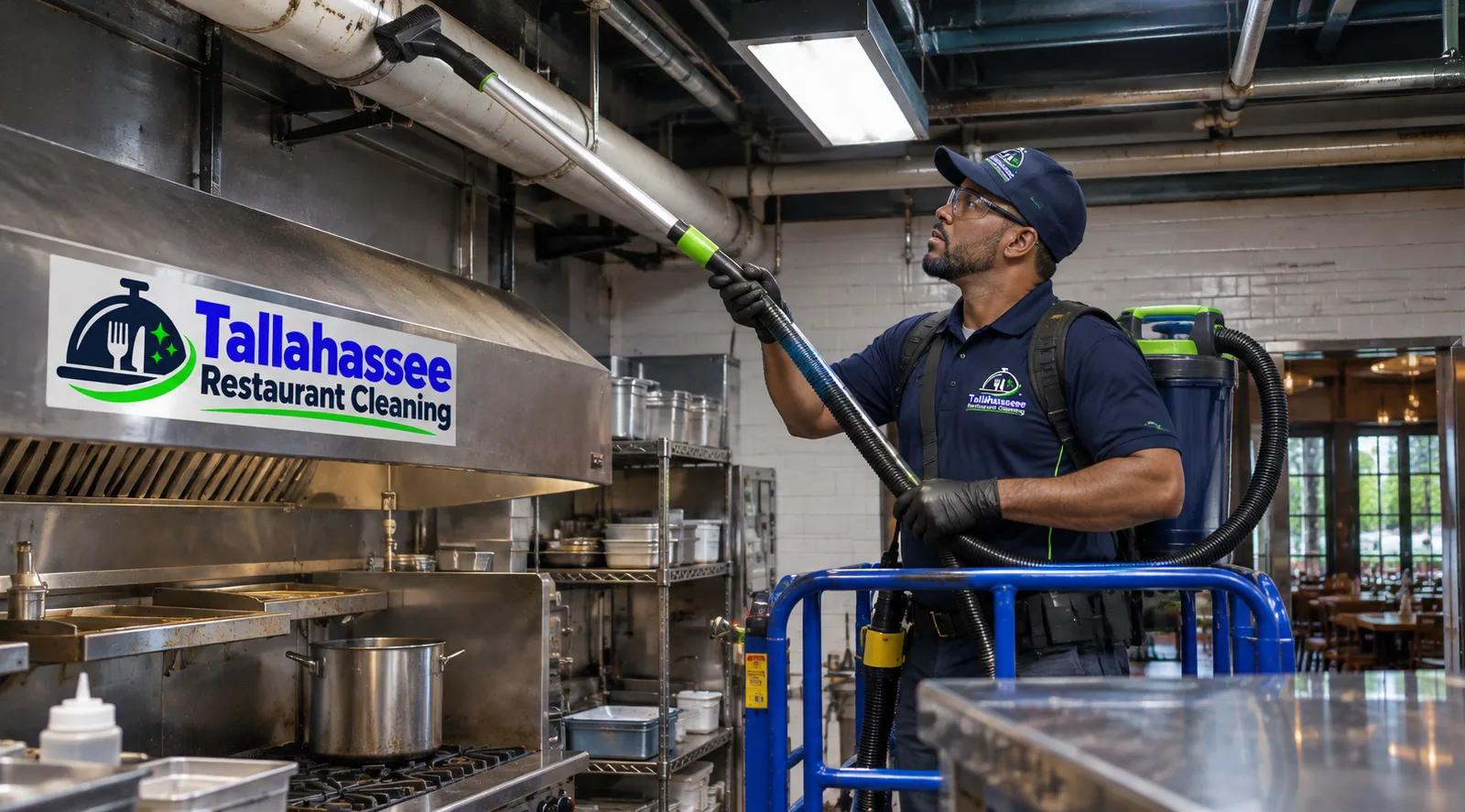
Hard-to-reach detail
Detailed Cleaning for the Surfaces Staff Cannot Easily Reach
Restaurant High Dusting Quincy addresses the buildup that settles beyond routine wiping height. Dust can collect on exposed ceiling structures, conduit, sprinkler piping, refrigeration tops, vents, light housings, wall ledges, and the upper surfaces of equipment. In an active kitchen, airborne grease can make that soil sticky and harder to remove with a dry duster alone.
Tallahassee Restaurant Cleaning plans the work around the room, soil type, access limits, and food-safety concerns. Serving nearby Quincy businesses, a professional restaurant company in Tallahassee, FL uses controlled methods intended to keep loosened debris away from food, clean utensils, and prepared surfaces. The work area is assessed before cleaning begins so the crew can select extension tools, commercial vacuums, microfiber materials, or appropriate access equipment.
Quincy is in Gadsden County, west of Tallahassee, so service planning accounts for travel as well as the restaurant's preferred work window. Florida's warm, humid conditions can contribute to sticky residue where airborne grease and dust meet. Regular attention to elevated surfaces helps keep that material from becoming a thick, difficult layer.
Elevated surface scope
What Restaurant High Dusting Quincy Can Cover
The scope starts with surfaces that can safely hold dust and debris over occupied work areas. Common targets include exposed rafters, ceiling beams, pipes, duct exteriors, conduit, cable trays, vent covers, light fixtures, signs, wall caps, high shelving, walk-in cooler tops, and the upper exterior surfaces of fixed equipment. Only accessible, appropriate surfaces are included. Electrical components, fragile finishes, fire-protection equipment, and unstable materials require extra care and may need restrictions.
The cleaning method depends on the deposit. A HEPA-filtered vacuum with a soft-brush attachment can capture loose dry dust at the source. Microfiber tools may be used where direct contact is suitable. Greasy films often need controlled damp wiping with a product appropriate for the surface, followed by attention to drips and residue. High dusting does not mean sweeping contaminants through the room with an uncontrolled feather duster.
This work complements routine restaurant kitchen cleaning in Quincy by reaching areas that are commonly omitted from daily and nightly checklists. It is separate from cleaning inside exhaust ductwork or servicing fire-suppression systems.
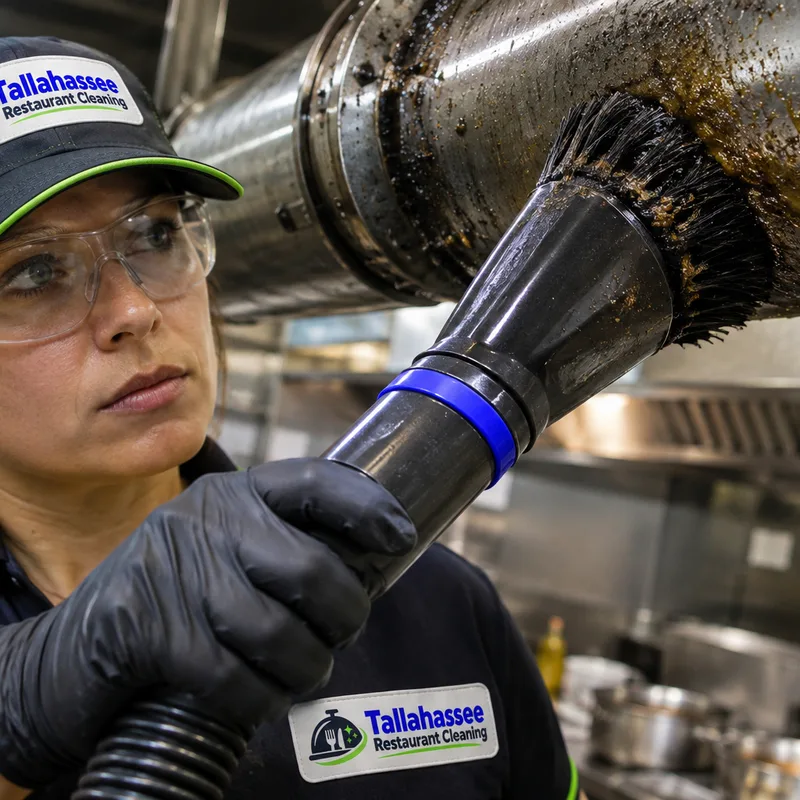
Defined overhead cleaning
A Scope Built Around the Kitchen
Overhead Structures
Exposed beams, rafters, pipes, conduit, duct exteriors, and other reachable ceiling structures are assessed for loose dust and bonded residue.
High Horizontal Surfaces
The crew can address equipment tops, wall ledges, shelf tops, door frames, cooler exteriors, and similar surfaces that collect settled material.
Controlled Soil Removal
Vacuum capture, soft brushes, microfiber tools, and careful damp wiping are selected according to the surface and the type of buildup.
Food-Area Protection
Exposed food and utensils must be removed or covered, and nearby preparation surfaces are protected before overhead work starts.
Practical Scheduling
High dusting is best scheduled during a closed period or low-activity window so access equipment and containment do not interfere with production.
Defined Exclusions
The written scope should distinguish surface dusting from exhaust-system cleaning, equipment repair, pest remediation, and regulated fire-system work.
-
Inspect the Elevated Surfaces
The crew reviews ceiling height, overhead obstructions, soil condition, equipment placement, and safe access points. This inspection identifies surfaces that can be cleaned and areas that require a specialist or facility representative.
-
Set the Scope and Work Window
The plan lists target surfaces, access requirements, exclusions, and the expected cleaning window. Restaurants can use this step to coordinate shutdown tasks, move portable items, and notify managers.
-
Protect the Work Area
Food, utensils, smallwares, and open ingredients are removed or securely covered. Preparation tables and sensitive equipment may also need protection before any overhead soil is disturbed.
-
Clean From High to Low
Technicians begin at the highest approved surfaces and work downward. Loose debris is captured where practical, while bonded soil is treated with a surface-appropriate method rather than scattered through the kitchen.
-
Complete a Final Review
Protective coverings and collected debris are removed, affected lower surfaces are checked, and the completed scope is reviewed. Any inaccessible area or material concern is documented for the restaurant's attention.
Controlled overhead cleaning
Why Overhead Buildup Deserves a Planned Response
High dust can remain out of sight until it forms visible clumps, darkens around greasy areas, or falls onto lower surfaces. Open ceiling designs create more horizontal edges than a smooth finished ceiling, while pipes and suspended utilities provide narrow collection points. Cleaning these areas on a planned basis is more manageable than waiting for a heavy layer to develop.
Source capture matters in food-service settings. Aggressive air blowing can redistribute particles, and uncontrolled brushing can drop debris onto equipment. A safer approach isolates the work area, starts high, captures loose soil, and cleans affected lower surfaces before the area returns to use. Staff should keep food production out of the active cleaning zone.
Frequency is based on actual conditions rather than a universal calendar. Open cooking, heavy fryer use, ceiling configuration, ventilation performance, nearby construction, and past cleaning intervals can all change how quickly residue appears. A visual inspection can determine whether the restaurant needs a one-time reset or recurring high dusting.
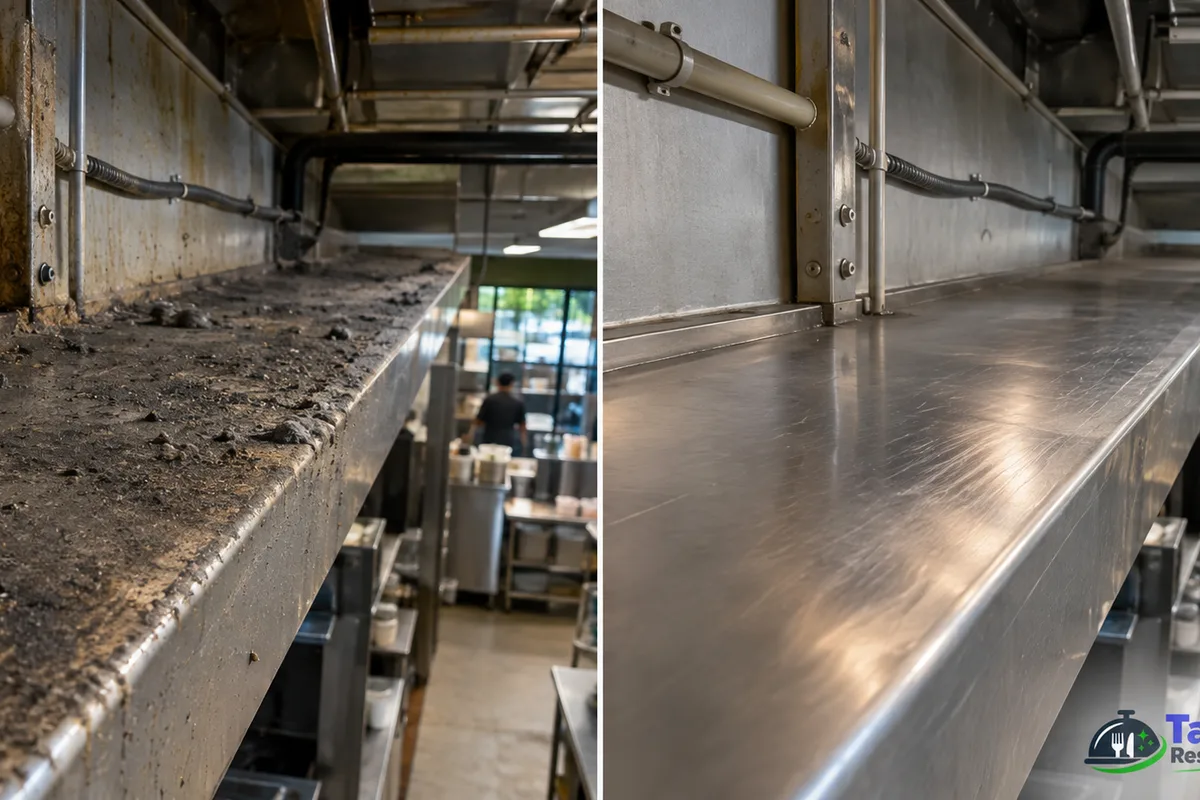
Clear scope and exclusions
Restaurant Kitchen Cleaning in Quincy With Clear Boundaries
A good quote identifies what will be cleaned, how the crew will gain access, and what the restaurant must prepare. Ceiling height is only one factor. Dense piping, hanging signs, fixed equipment, fragile light covers, and narrow aisles can slow access. Sticky grease-bound soil generally takes more work than loose dust because the surface may require repeated controlled wiping.
Restaurant managers should also ask how debris will be contained and whether the crew needs utilities, floor space, or a fully closed kitchen. If lifts or ladders are required, the route and setup area should be confirmed before the appointment. Tables, carts, and portable racks may need to be relocated so the crew can work without leaning over food-contact areas.
High dusting is exterior surface cleaning. It does not replace hood and exhaust cleaning, HVAC maintenance, fire-suppression inspection, mold assessment, or pest control. If the inspection finds moisture damage, active contamination, damaged insulation, or an unsafe overhead component, cleaning may need to pause until the proper qualified party addresses the condition.
Planning your investment
How Much Does Restaurant High Dusting Cost in Quincy?
Restaurant high dusting in Quincy typically ranges from about $400 to $1,500 for a smaller or moderately sized restaurant, while large kitchens, high open ceilings, or heavy grease-bound buildup may cost more. These are general planning ranges, not a fixed quote.
Final pricing depends on ceiling height, total surface area, soil level, lift or ladder access, containment needs, obstacles, scheduling, and whether lower surfaces require follow-up cleaning. The exact cost is confirmed after the work area and requested scope are inspected.
Describe the ceiling layout, areas of concern, and preferred service window to receive a clear scope for your Quincy restaurant.
Common questions
Questions About Restaurant High Dusting in Quincy
How often should a Quincy restaurant schedule high dusting?
The right interval is based on visible buildup, cooking activity, ceiling design, and ventilation conditions. A kitchen with exposed structures and grease-producing equipment may need attention sooner than a dining room with a smooth finished ceiling. An initial inspection provides a practical baseline for recurring service.
Can high dusting be completed while the restaurant is open?
High dusting is generally best completed when food production has stopped and customers are not in the active work zone. In Quincy, the appointment can be coordinated around a closed day, an overnight period, or another low-activity window, depending on access and the amount of work.
Does the restaurant need to prepare before the crew arrives?
Yes, exposed food, clean utensils, and smallwares should be removed or securely protected before overhead cleaning starts. The restaurant may also need to move carts, portable racks, decorations, or tables so ladders and other access equipment can be positioned safely.
Can you remove greasy dust from pipes and ceiling structures?
Greasy dust can often be removed from washable, accessible surfaces with vacuuming and controlled damp cleaning. The exact method depends on the finish and soil level. Unsealed, damaged, porous, energized, or fragile components may require limits or approval before work proceeds.
Is high dusting the same as restaurant exhaust cleaning?
No, high dusting cleans accessible exterior surfaces such as rafters, pipe exteriors, conduit, ledges, and equipment tops. Exhaust cleaning addresses grease inside hood, fan, and duct components and is a separate specialized scope.
How long does restaurant high dusting take?
A smaller, accessible area may be completed within one work window, while high ceilings, dense overhead utilities, or heavy bonded residue can require more time. Travel to Quincy is considered during scheduling, and the expected duration is set after the space and access needs are reviewed.
What should be included in a Restaurant High Dusting Quincy quote?
The quote should identify target surfaces, cleaning methods, access equipment, containment steps, preparation duties, scheduling assumptions, and exclusions. A written scope also helps distinguish overhead surface cleaning from HVAC, exhaust, fire-system, repair, and remediation work.
Plan High Dusting Around Your Restaurant Schedule
Share the areas collecting buildup and the times your kitchen is available. Tallahassee Restaurant Cleaning will review access, surface conditions, and preparation needs before confirming the scope.